
Moses Kamau
Rope-Access Lead · IRATA Level III · 11 years on Nairobi rooflines
Why the third-floor gutter on a Westlands office block fails before the bungalow gutters do
Most property managers don't realise that height changes everything. At ground level, a blocked gutter is a nuisance — water spills over the edge, the flower bed gets muddy, a fascia board starts to rot. Manageable. At the third floor of a commercial block on Waiyaki Way, the same blockage becomes a structural event. The overflow doesn't hit soil. It hits the building envelope.
Nairobi's commercial buildings have a specific problem I see repeatedly: the gutters were specified for the original roof plan, then the building was extended upward — a penthouse added, a rooftop plant room bolted on — and nobody re-engineered the drainage. The original 100mm half-round aluminium gutter is now collecting water from twice the catchment area it was designed for. When the April rains hit 40mm in an hour, it's not a clog that causes the overflow. It's simple arithmetic.
"The building was extended upward — and nobody re-engineered the drainage. When the April rains hit 40mm in an hour, it's not a clog. It's simple arithmetic."
Rope access changes what's possible. A ground team with a ladder can clear a single-storey gutter in twenty minutes. But to clear the primary fascia gutter on a six-storey block in Kilimani — where scaffolding would cost KES 80,000 and take three days to erect — a two-person rope crew can complete the same work in four hours from a single anchor point. We descend from the roof, work along the gutter run, flush the downpipes from the top, and confirm flow at ground level before we leave.
The Nairobi-specific detail that surprises most clients: jacaranda debris is not the main enemy above the second floor. Above the canopy line, you're dealing with red murram dust carried by the Mathare Valley wind corridor, compacted into a dense clay plug inside every downpipe elbow. It sets almost like concrete in the dry season. By March, it's solid enough that a standard pressure flush won't shift it — you need mechanical rodding followed by flush, which is exactly what the rope-access kit allows at height.
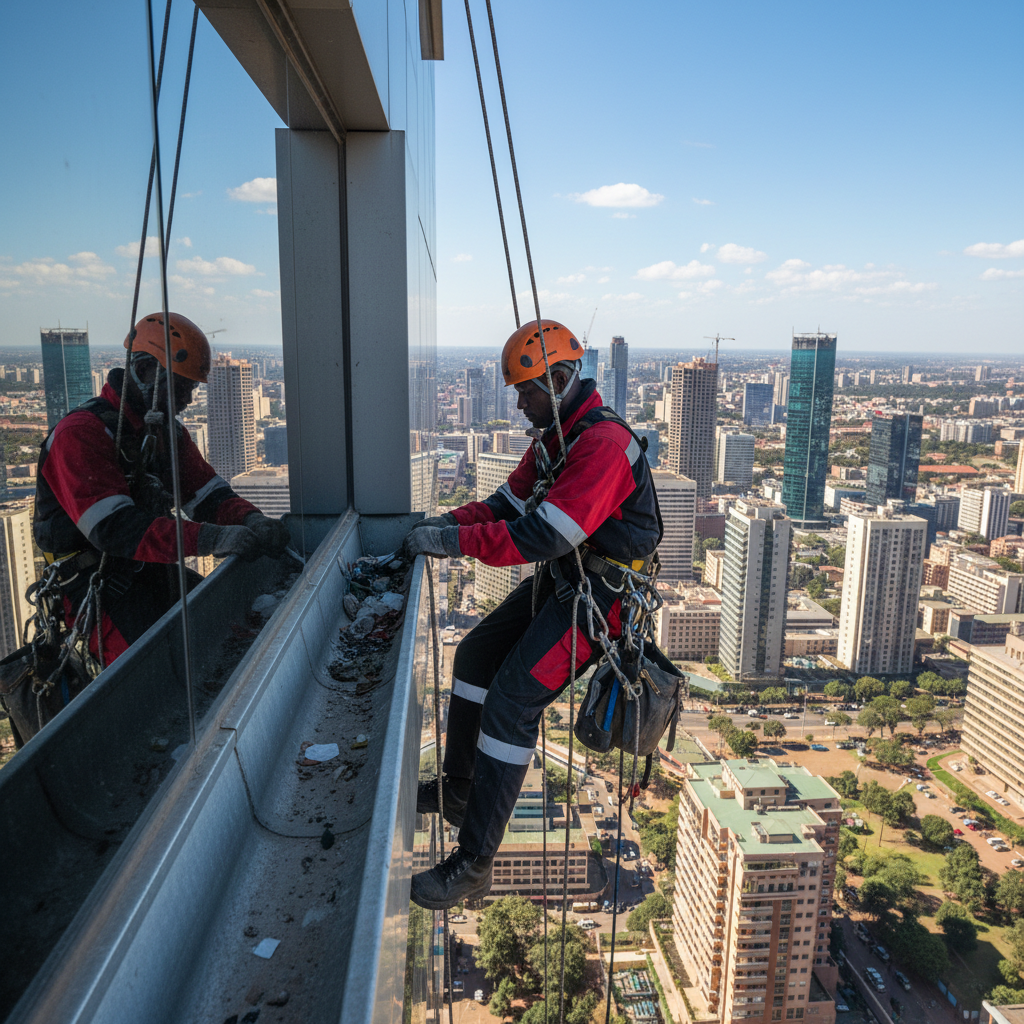
Moses's crew descending a Westlands office block fascia gutter run. Two technicians, one anchor point, four hours — no scaffolding.
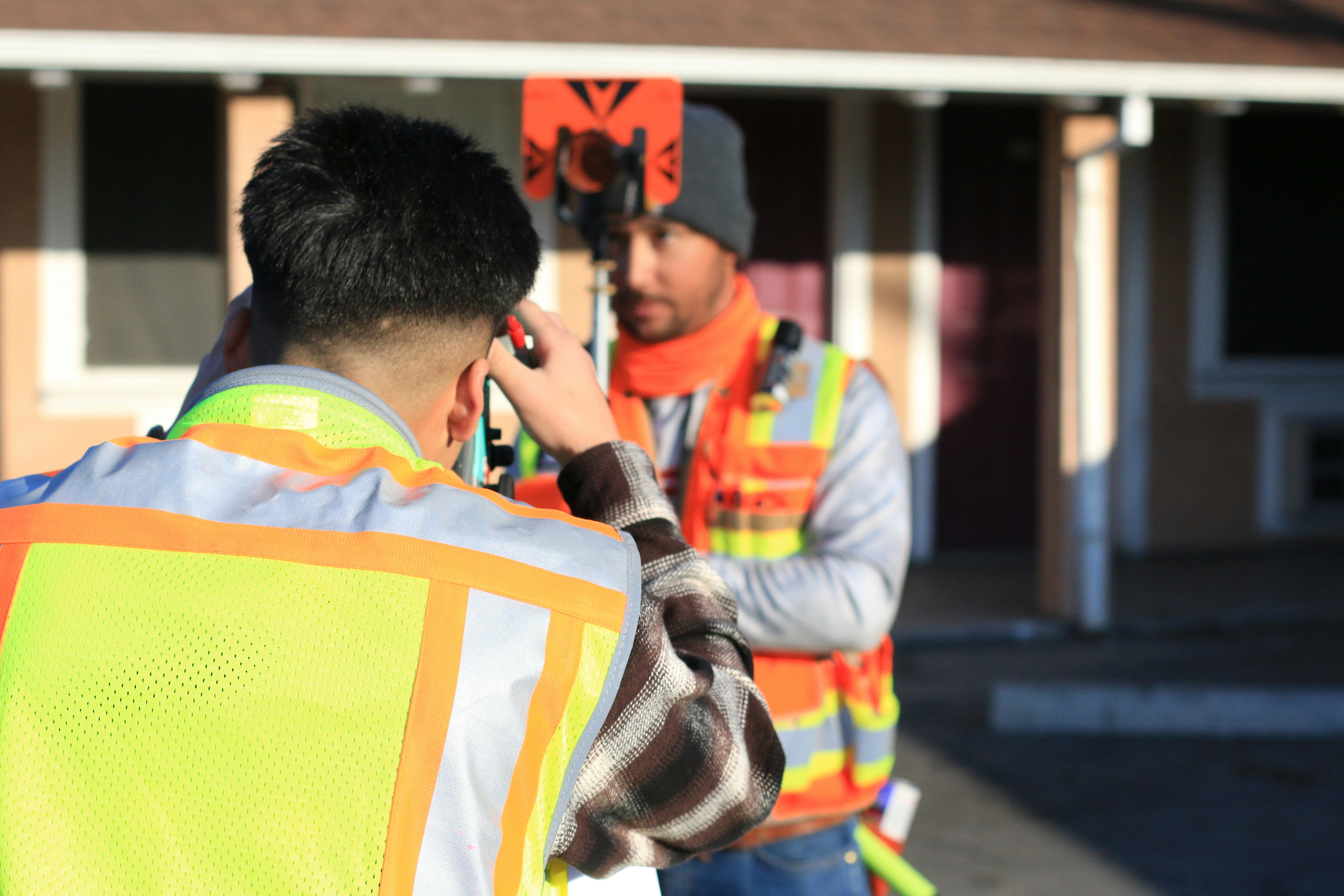
Wanjiku Muthoni
Drainage Surveyor · 9 years diagnosing Nairobi roofline failures
Five blockage types I see on Nairobi rooflines — and how to spot them before the rains
In nine years of drainage surveys across Nairobi, I've seen the same five failure patterns on repeat. The frustrating thing is that every one of them is identifiable from the ground with the right knowledge — you don't need to get on the roof to know you have a problem. Here's what to look for before April.
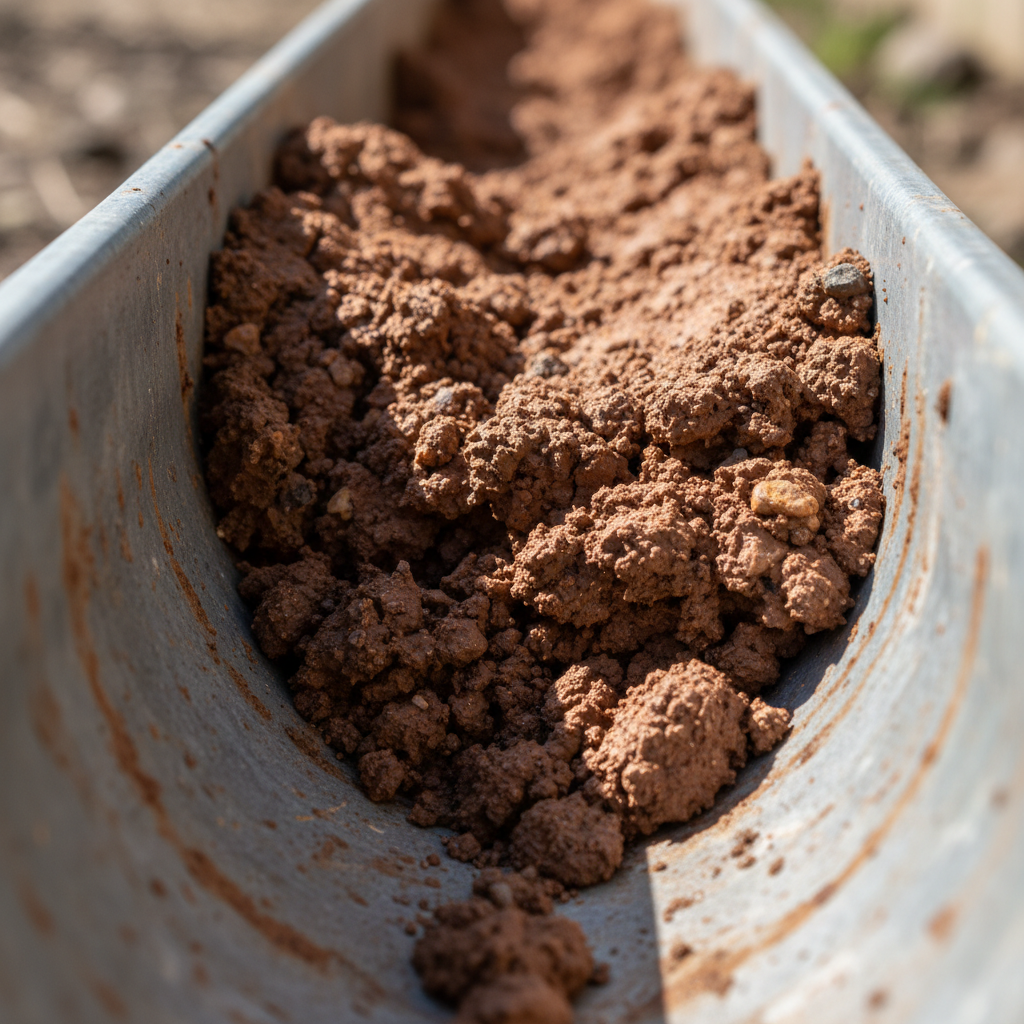
Red Murram Clay Plug
Wind-carried murram from Nairobi's red-soil outskirts compacts into downpipe elbows during the dry season. By March it's dense enough to resist standard pressure flushing. Requires mechanical rodding before the rains.
Ground-Level Indicator
Gurgling sound at downpipe base, no visible flow during light rain
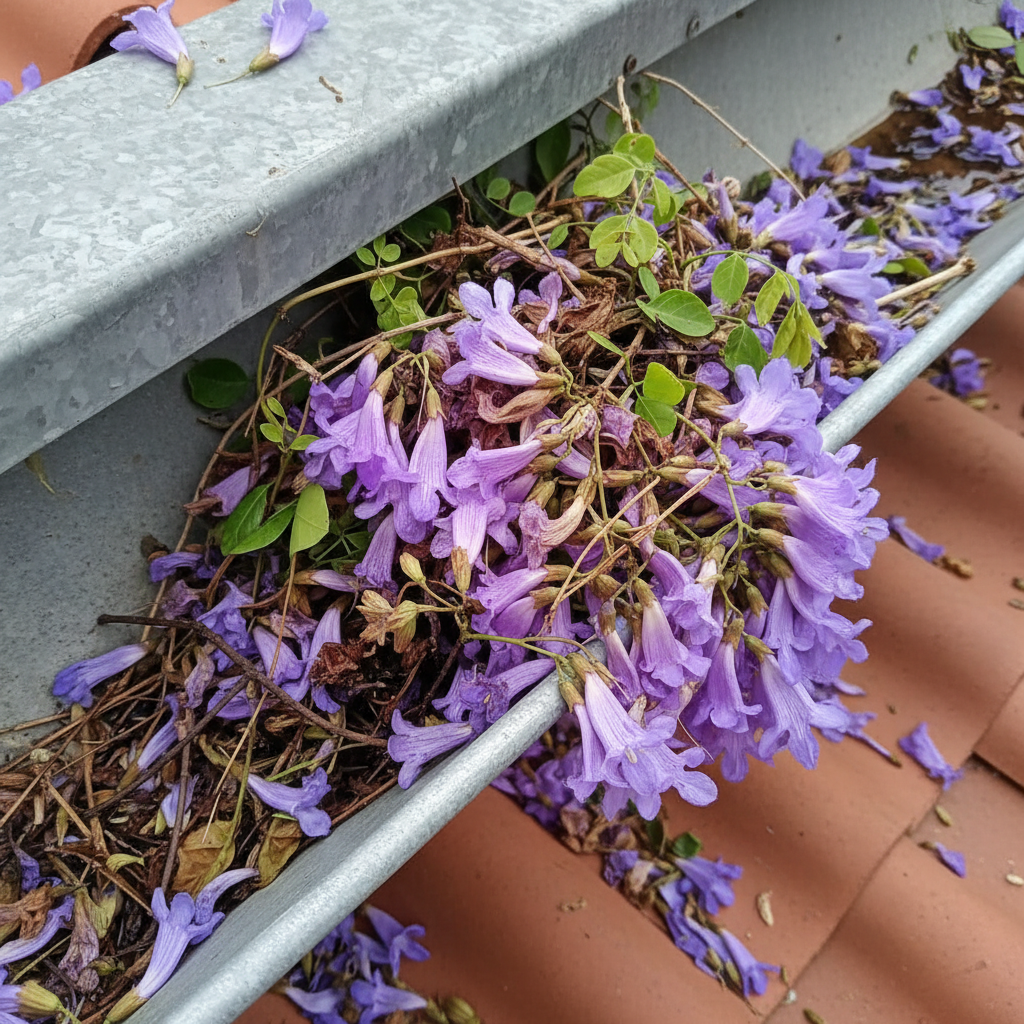
Jacaranda Debris Mat
Purple jacaranda flowers and seed pods form a dense mat across gutter valleys from October to December and March to May. The mat traps fine silt and creates a self-compacting plug over two to three rain cycles.
Ground-Level Indicator
Overflow at gutter midpoint, visible plant matter at outlet
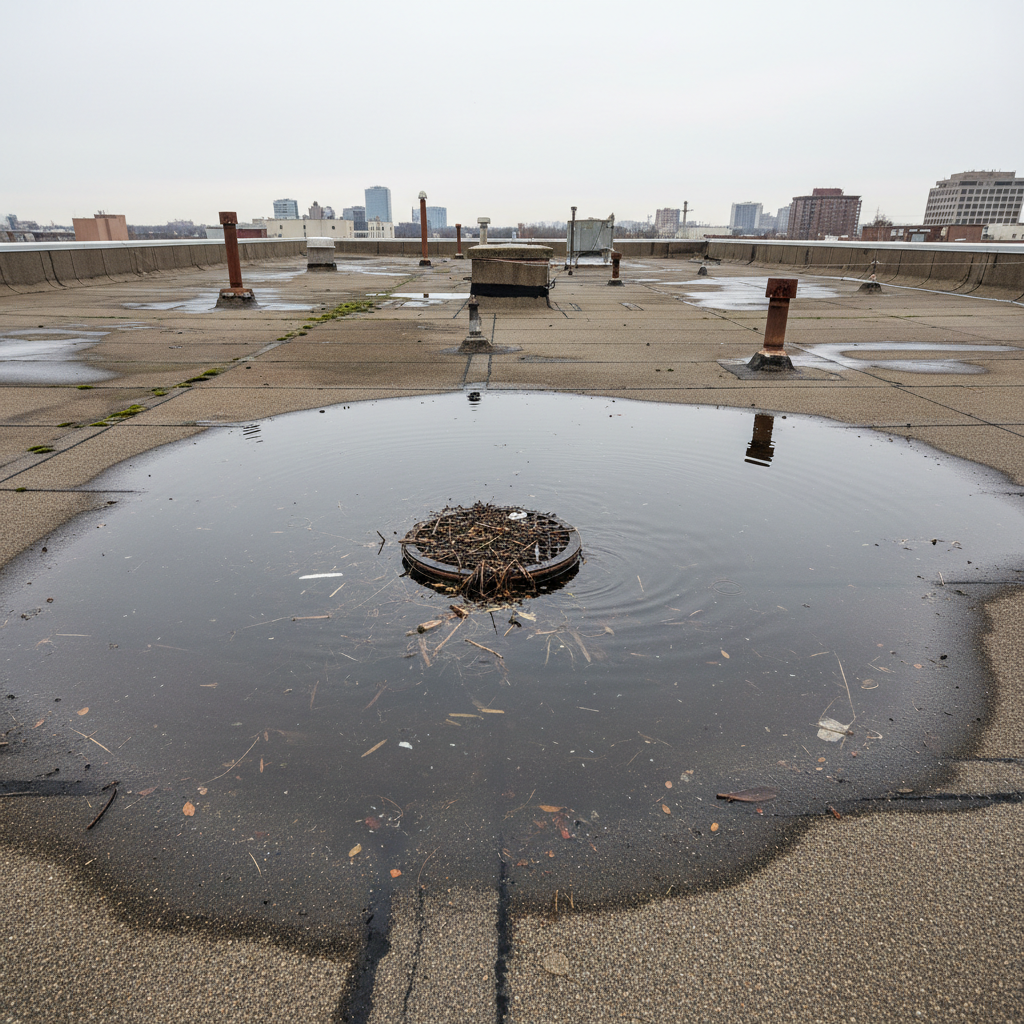
Flat-Roof Sump Silting
Nairobi's popular flat concrete roofs collect airborne dust and debris in their central sumps. When the sump outlet silts closed, the roof retains standing water — accelerating slab carbonation and causing ceiling stains within one rain season.
Ground-Level Indicator
Standing water on roof 48+ hours after rain, damp ceiling tiles on top floor
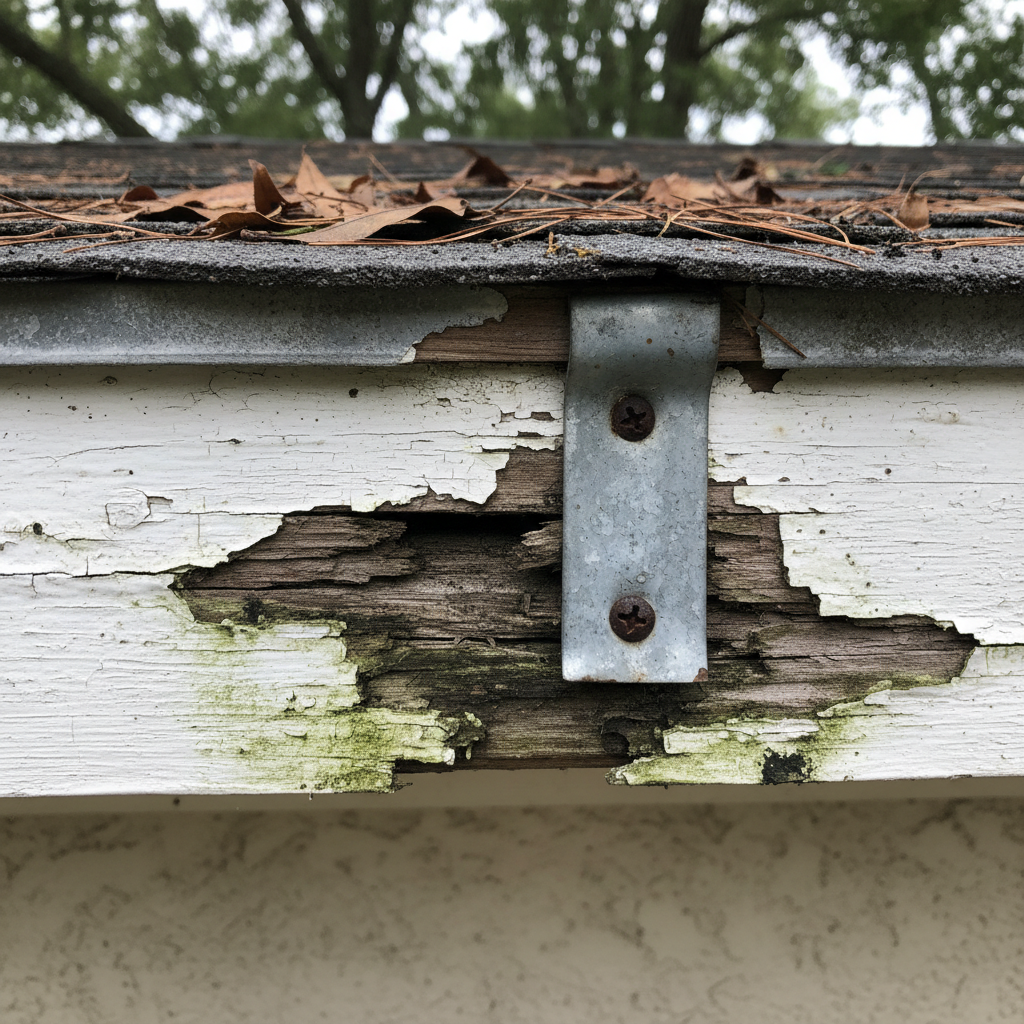
Fascia Board Rot Gap
When gutters overflow repeatedly, the fascia board behind them absorbs water and rots. The gutter bracket pulls away, creating a gap between gutter and fascia. Water now channels directly behind the cladding — invisible until the ceiling goes.
Ground-Level Indicator
Visible gap at gutter rear, paint bubbling on external wall below roofline
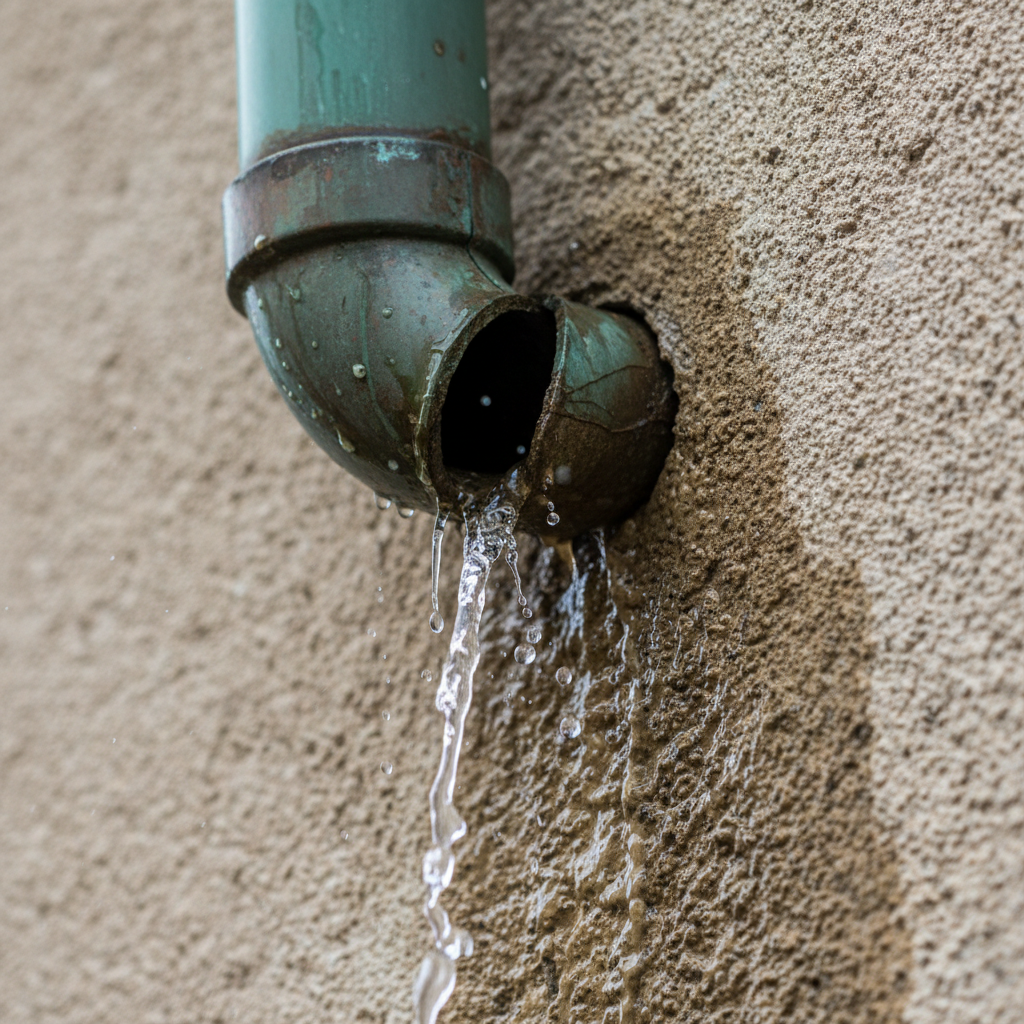
Downpipe Joint Displacement
In Nairobi's temperature range — 12°C nights to 30°C afternoons — metal and PVC downpipes expand and contract significantly. Over five years, push-fit joints creep apart. Water escapes at the joint and runs down the wall face instead of through the pipe.
Ground-Level Indicator
Damp stripe on external wall, staining below a downpipe joint
Wanjiku's team surveys your property and delivers a written blockage report within 24 hours.
How persistent gutter overflow compromises Nairobi's natural-stone facades — and why it's irreversible after four seasons
Karen's stone-facade homes are among the most architecturally distinctive properties in East Africa. The natural stone — sourced from Mlolongo and Athi River quarries — is load-bearing in older construction and cladding on newer builds. In both cases, it has one significant vulnerability: sustained water contact at the mortar joint.
A gutter that overflows consistently doesn't just stain the facade. It saturates the mortar bed behind the stone face. Nairobi's temperature differential — cold nights, warm days, particularly in the Ngong Hills corridor — creates micro freeze-thaw cycling that progressively fractures the mortar. After two rain seasons of unaddressed overflow, the stone face begins to separate from its backing.
"After two rain seasons of unaddressed overflow, the stone face begins to separate from its backing. A KES 12,000 gutter clearing becomes a KES 800,000 structural repointing contract."
The economics are stark. A routine gutter clearing by a qualified rope-access crew costs between KES 8,000 and KES 22,000 depending on property size and access complexity. A structural repointing contract on a Karen stone facade — once the mortar has failed — runs between KES 400,000 and KES 1.2 million, and requires the stone to be removed, the backing rebuilt, and the stone re-laid. It is not a repair. It is a reconstruction.
What I tell every Karen homeowner I survey: the gutter is not a cosmetic feature. It is the first line of structural defence on a natural-stone building. When it fails, the building starts its slow dissolution from the outside in, and the process is invisible until it's expensive.
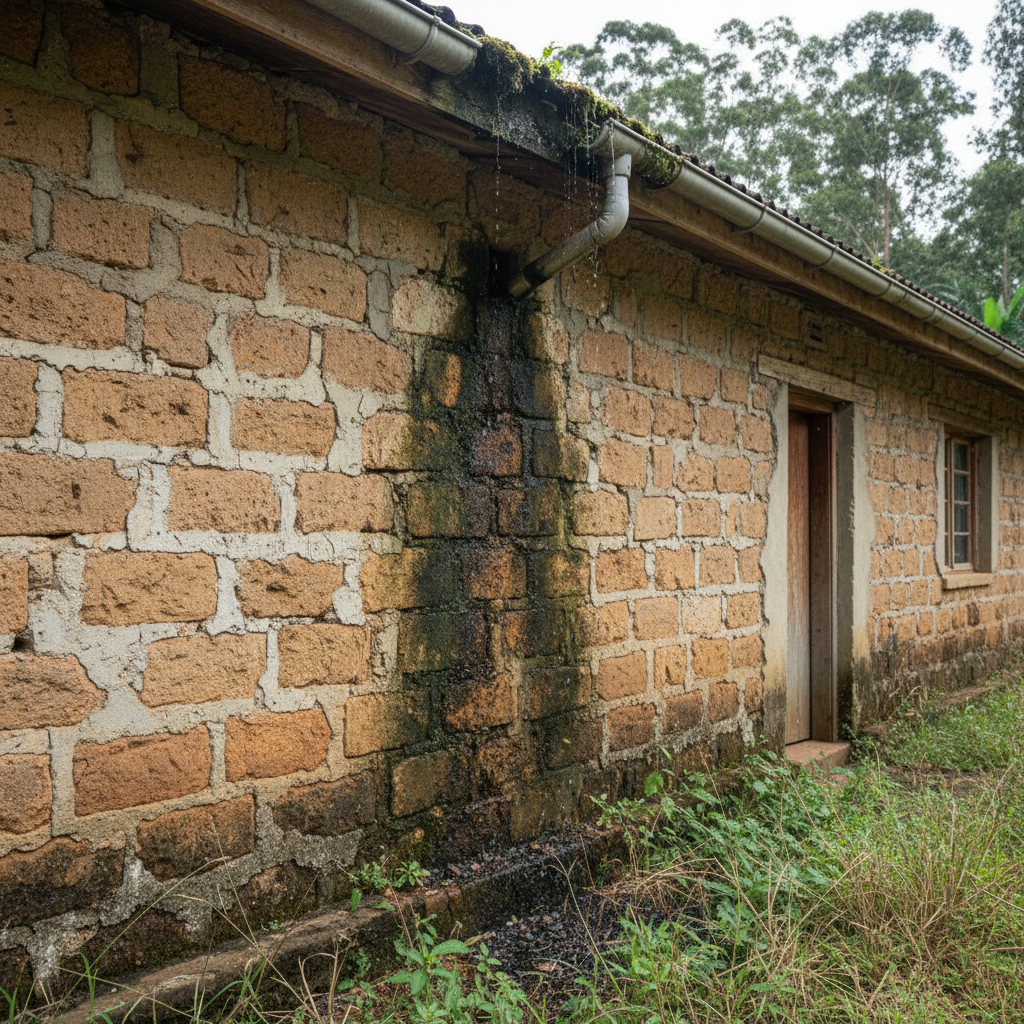
Mortar joint saturation visible as dark horizontal banding below roofline. Two seasons of overflow. Repointing assessment: KES 620,000.
Long Rains Begin
Estimated days until Nairobi's long rain season begins. April 2026. Gutters should be cleared and inspected before this date.
48-hour turnaround · Written condition report included · Nairobi-wide coverage
4,200+
Gutters Cleared
48hr
Turnaround
100%
Insured Crew
When to clear — and when it's too late
Nairobi has two distinct rain seasons. The optimal clearing windows are March (before long rains) and September (before short rains). Clearing during peak rain season is possible but costs 40% more due to access complexity.
Jan
Dry
Feb
Dry
Mar
Clear Now
Apr
Long Rains
May
Long Rains
Jun
Easing
Jul
Dry
Aug
Dry
Sep
Clear Now
Oct
Short Rains
Nov
Short Rains
Dec
Easing